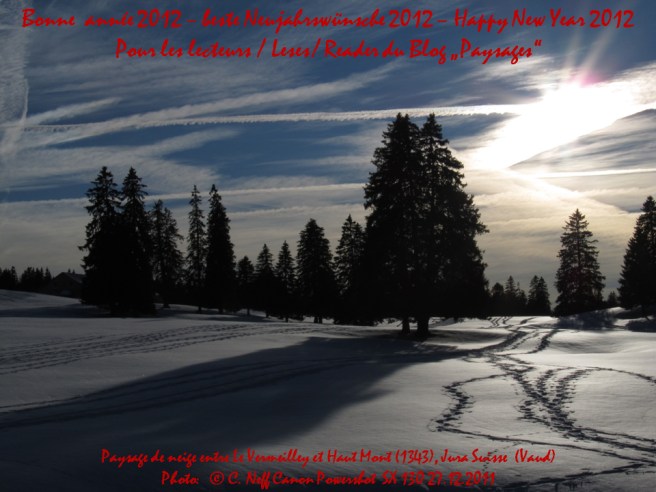
Blognotice 10.11.2012: back sight on a rainy November Wednesday morning in South West Germany

Daybreak in Grünstadt: 7. November 2012, 5.50 am. local time,  raindrops were falling on the roofs of a sleepy German town. Some minutes later I turned my notebook on to get news from the results of presidential election in the U.S. The first info I got was an alert message by email from le Monde.fr – sent by le Monde.fr  at 5.21 – “   “Barack Obama réélu président des Etats-Unis (Barack Obama reelected as President of the United Staates) . At the same moment my wife shouted, – Barack Obama wiedergewählt (Barack Obama reelected) – it was six a clock in the morning – she heard the message in the regional radio news.

At 6.22 am. I received an electronic message from U.S., from a former schoolmate now living in California “looks like Obama won”. At 6.30 arrived the New York Times Alarm – “Breaking News Alert – The New York Times Wednesday, November 7, 2012 — 12:13 AM EST Breaking News: President Obama Wins Re-election, The New York Times Projects”. At 7.01 I read the Le monde.fr alert messages announcing  Mitt Romney conceded (Mitt Romney reconnaît sa défaite face à Barack Obama) – and got the same info’s on the NYT live coverage.

At 7.15 am. I mailed back to California “Good Night in California, – ich freue mich für Amerika, – I feel glad for the U.S.!” In Grünstadt the black colors of night changed to diming grey daylight, and it was still raining. The projection of the victory of Barack Obama done in Blognotice 05.11.2012, – had become reality, – but the reelection was much more impressive than I projected it in paysages – because I thought (and wrote) that it could very narrow – similar as the reelection of Gerhard Schröder in 2002 as Chancelor in Germany after the Elbhochwasser . But the political impact of the Hurricane Sandy can’t be compared to situation in Germany in 2002 following the Elbhochwasser, – after all I have read the political impact of the Hurricane Sandy on Obamas Victory seemed to have been minimal – but without the Elbhochwasser Gerhard Schröder would have had enormous difficulties to be reelected as Chancellor . Being sure that Barack Obama was reelected I also remembered my souvenirs of the first election of Barack Obama four years ago. I had to work in Tunis in November 2008 and I followed the historical moment of Barak Obama election in French TV and on CNN. It was an unbelievable atmosphere in Tunisia at that time. I remember a rainy November week in Tunis and la Marsa – on one hand a beginning “fin de règne” ambience in Tunisia – and on the other hand – the United States people for the first time elected an Afro-American to hold the presidential office. Now four years later we know that this November 2008 election of Barack Obama was not an historical accident.

At about 7.50 am. I started my car ride to Office in Karlsruhe, – and it was still raining. Some hours later I learned that Jérôme Ferrari had won the 2012 Prix Goncourt for his novel “Le Sermon sur la chute de Rome” („The Sermon on the Fall of Rome“). So unfortunately the second forecast in paysages  Blognotice 05.11.2012 for the Prix Goncourt winner in 2012 was not as good as the projection for the U.S. presidential election. Neither «La vérité sur l’affaire Harry Quebert »  (Joël Dicker)   nor   « Lame de fond » ( Linda Lê) won the Prix Goncourt. Following Pierre Assouline in the Republique des Livres the novel of the Swiss-French writer Joel Dicker is a great American novel describing the 2008 electoral America. A great American novel written in French by a Swiss-French author – this sounds very strange. I have not read the book, but after all what Pierre Assouline wrote about the novel (see here; in French) it would merit a translation into English.

On that last Wednesday morning I also read in our local News Paper, die Rheinpfalz, in an article signed Dagmar Gilcher (Gilcher, D. 2012: Aber die Bilder bleiben) that the novel “L’Art français de la guerre” (Alexis Jenny), the Prix Goncourt winner 2011, has now been translated into German. “Die französische Kunst des Krieges” is the German title of the war novel written by Alexis Jenny . I have read the book in July 2012 and I think it was one of the best French novels I read in the last years. Of course this book would also merit an English translation. The German translation (translator = Uli Wittmann) was released in October 2012 on the German Book market.  L’Art français de la Guerre („The French art of war“) immerges deeply into the recent military past of France – and in that recent military past France had to suffer hard in Indochina and Algeria. In Indochina – as did the U.S. forces some years later what now was called Vietnam. The name of the region had changed, – but the place, the geography remained unchanged – Vietnam (and Laos & Cambodia). For both, the French colonial troupes in Indochina and the US-Forces in Vietnam it was a terrible experience – a war in foreign land. Indochina – or as we call it now – Vietnam – confronted the French – and later the U.S. Soldiers with a strange and unfamiliar geography, and an alien people – far away from European – French or U.S. American culture.  A very detailed critic of the “L’Art français de la guerre” can be read in “Le grand art si français d’Alexis Jenni (in French)” published in the Pierre Assouline book blog la Republique des livres in August 2011. It sounds strange that this book has not been translated into English, – it is an impressive novel which describes us how war scares over our cultural heritage and interior landscapes – I am sure that the story of Victorien Salagon would find a large audience in the English-speaking world, particularly in the U.S.A.

The morning of the Wednesday 7.11.2012 was a grey November morning in Southwest Germany. All over the morning we heard the rain falling on the autumn leaves. Now four days later as I write down this blognotice it’s still raining. Yesterday we have had some hours of sun shine, – but except this little time of sunshine – I have the feeling that the week of the reelection of Barak Obama for four more years – was a very rainy week – as it was in Tunis in November 2008.

Sources:

Gilcher, Dagmar (2012): Aber die Bilder bleiben. „Die französische Kunst des Krieges“: Alexis Jenny gefeiertes Romandebüt ist jetzt auf Deutsch erschienen. In: Die Rheinpfalz, Nr. 259, Kultur, Mittwoch, 7 November 2012.

Christophe Neff, 10. November 2012
Some words concerning Eryngium campestre (field Eryngium) on Wikipedia.en

When I was writing Balade d’été sur le Grünstadter Berg (19.7.2009) and linking „panicaut champetre „(the French word for field Ernygium) to wikipedia.fr – I had also a look to the English article on Wikipedia.en describing field eryngium . About 70- 80 % of the article was wrong, – as for example „A member of the carrot family“ – (Eryngium campestre is member of the Apiacea) – and the editing of the wrong family affiliation went back to 15. March 2007 (see revision history). I corrected the sentence, and linked the article to the article describing Eryngium campestre on webpage’s of the Botanical Society of the British Isle and the distribution map on telabotanica showing the distribution of the plant in continental France. I have not corrected the sentence concerning the gall fly, but I think that the celery fly (Acidia heraclei = Philophylla heraclei = Euleia heraclei) should be better on in the article concerning the celery (Apium graveolens). But you will not find anything concerning the celery fly in the celery articles, neither in en, de, fr. This shows clearly the problem of the reliableness of articles concerning traditional naturalist or botany articles on wikipedia. This is only one example; I guess I would find many other examples to demonstrate the problem.

The other problem is that many articles of traditional naturalist interest (botany, physical geography etc. ) are simply missing – as I wrote in the Balade d’été sur le Grünstadter Berg (19.7.2009) no article in Wikipedia.fr about the Zinnkoepfle, which is not only a very interesting naturalistic site but also à notable french „Grand Cru“ (AOC Alsace Grand Cru Zinnkoepfle) ! Neither nor there is an article about the „Grünstadter Berg“ in Wikipedia.de. Noting that the „Grünstadter Berg“ would also merit an English Wikipedia article – because it was during the cold war an important U.S. Missile Basis, – (the 887th Tactical Missile Squadron was based on the Grünstadter Berg ). I think most people in Grünstadt have forgotten the importance which the Grünstadter Berg had during the „cold war“ – or perhaps never known – or never wanted to know

I am not only critizeing Wikipedia – sometimes I’ll try to contribute to .de ,.fr , .en , to improve articles, sometimes even create new one. But not too much on topics where a I have a professional competence – writing on Wikipedia is not very interesting – its not valorizationing scientific competence – that’s the reason why I never intervened in Article Feuer (Umweltfaktor) – the article about fire ecology in the German Wikipedia – which in my opinion is a very good example for a bad article, an article which would need in-depth clean-up. Unlike the German fireecology article the English fireecology articel seems to be very well done, accurate citation of sources etc, – perhaps a little bit to much focused on the U.S. – because we have also forestfires outside the U.S. (and also fireecologist outside the U.S.) – but all in all a good introduction into Fire ecology.

Concerning the „Grünstadter Berg“, perhaps in some days or weeks, if until then, not some other has started an article, I will write a stub for Wikipedia.de. But I prefer to collect material for a regional geography paper presenting the „Grünstadter Berg“ and to submit to a regional geography or naturalistic journal as for example Pollichia, than to write a stub for Wikipedia.

Concerning the Zinnkoeple the French botanist Emil Issler (1951, 1975) has published some papers about the Zinnkoepfle. But even Emil Issler, the French botanist who has done so much for the research of flora & vegetation of the Vosges and the Alsatian plain – he is unknown in the French Wikipedia – and in the other wikis of course too. For (germanreading) readers more interested in a new approach of the Zinnkoepfle and the vallée noble, the can read the pages 48- 51 in my MEDGROW (Neff 2000), – the book version of my PHD-Thesis, but most of the chapter is dedicated to the „Cedrus atlanitca“ (Atlas cedar) experimental plantations done by French foresters in the 1960 not far away from the „Zinnkoepfle“ – in the „forêt du Osenbühr“. And this „Cedrus atlantica“ site, where Cedrus has begun to regenerate without any human intervention, would also merit a botanical & dendroecological revisitation by myself or colleagues – because we could win some interesting findings for global change research and adaption of Mediterranean forest trees in Middle-European forestry, – but this of course has nothing to do with Wikipedia.

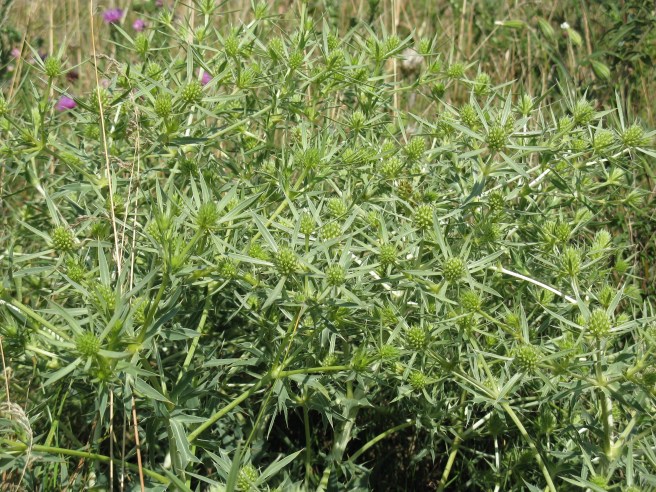
eryngium-campestre-grunstadter-berg-1972009.1248790112.jpg

Field eryngium (Eryngium campestris) on xérothermique subméditerranéen grassland on the Grünstadter Berg (Photo C.Neff 19.7.2009 (Canon Powershot A720 IS)).

Literature cited:

Issler, E. (1951): Trockenrasen – und Trockenwaldgesellschaften der oberelsässischen Niederterrasse und ihre Beziehung zu denjenigen der Kalkhügel und der Silikatberge des Osthanges der Vogesen. In: Berichte der Schweizerischen Botanischen Gesellschaft, p. 664- 659.

Issler, E. (1975): Forêts et garides de la plaine haut-rhinoise. In : Saison d‘ Alsace, 61-62, p.94-113.

Neff, C. (2000): MEDGROW – Vegetationsdynamik und Kulturlandschaftswandel im Mittelmeerraum. Mannheimer Geographische Arbeiten, H. 52, Mannheim (Dissertation/PHD-Thesis). (ISBN 3-923750-80-3)

Christophe Neff, Grünstadt

Restarting Ecologia mediterranea

couvertue-ecologia_mediterranea_2008-34_01.1289635906.jpgSome days ago I have made a French posting „ecologia mediterranea – un nouveau départ ! “ about the rebirth of Ecologia mediterranea. I think the rebirth of Ecologia mediterranea is such an important event that it also merits a short English posting. Ecologia mediterranea was for about 25 years the leading scientific journal for Mediterranean type ecosystems, but some years ago it felt in sort of dormancy, – but in fact it was never down – but the publication rhythm was very irregular. Now the new Editor in chief Thierry Dutoit has began a revitalization of the Journal – the Journal has got his own Journalhomepage – and all previous number of the Journal – from the very first beginning in 1975 to the number 34 of 2008 can be downloaded for free on the electronic archive of the Journalhomepage . The Internet site of the Journal is hosted by the „Universite d’Avignon and the Pays de Vaucluse„, where the Editor in chief Thierry Dutoit has a professorship in agronomy. I hope the new editor in chief and his editorial team will successfully lead the Ecologia mediterranea to new performance – to at least becoming was it was formerly – the leading scientific journal of Mediterranean type ecosystems – the so called MTE ! The only downer is, that Ecologia mediterranea is only accepting French and English manuscripts for publication- I would have preferred it, if they would accept also Italian, Portuguese and Spanish manuscripts. At the least they should accept Spanish manuscripts – as the other (New World) Mediterranean ecology & botany Journal the Madroño , the Journal of the California Botanical Society does.
But after all – I wish good luck for the rebirth of Ecologia mediterranea – and as reader of the review I hope to read soon interesting manuscripts.

Sources & Literature cited :

Dutoit, T (2008) : Éditorial. Ecologia mediterranea Revue internationale d‘ écologie méditerranéenne – Mediterranean Journal of Ecology, Vol 34, 2008.

Christophe Neff, Grünstadt le 24.7.2009

The Fatal Forest Fire – remembering the “1949 Mega fire” in the „Forêt des Landes” (South West France)

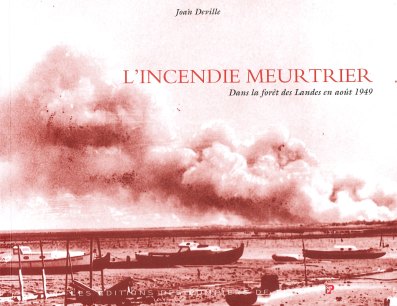
In August 1949 the „Forêt des Landes“ in Southwest France near the Atlantic coast between Bordeaux and Arcachon was destroyed by a mega-forest fire – 50.000 ha of forest land were burnt – and 82 people killed. This was the most deadly forest fire in Europe in modern times (and perhaps also in historical times). Some days ago I dedicated a posting in French with the title „1949 – l‘incendie meurtrier dans la Forêt des Landes “ to this notable fire event. The fatal fire event burnt the Forêt the Landes (in English sometimes called Landes Forest ),a large forest ranging the Atlantic coast from the Gironde estuary to Arcachon in the South, – a forest dominated by 90% of Maritime Pine (Pinus pinaster). This forest fire has been completely forgotten by the collective memory in France (and also in the rest of Europe). Till today there is no article neither in the French nor English Wikipedia describing this notable forest fire event.

buchdeckel-joan-deville-incendie-meurtrier-1949-landes.1246879256.jpg

For people reading French and interested in European fire history I would suggest to read the new book of Joan Deville« L’incendie meurtrier – dans la forêt des Landes en août 1949 » retracing the fire history of this murderous fire. In my French billet there is a more detailed résumé of the book. The book is not a „fireecolgy reader“ – its written from the view point of the fire-fighters – it’s a fire fighter perspective – and most of the 82 victims of the fire were firefighters (voluntary fire brigade men, and service men from the French army) but also a fire ecologist, a geographer, a forester can learn much about the behavior of such a fire, which I would call a „Mega fire“ or „Mega forest fire event“ from reading the book. This fire had also another quality than most other European forest fires – which are mostly Mediterranean fires – a very high fuelloading in some way comparably to what we knew from pacific coast fires in the U.S. (Washington, Oregon, Montana) and Canada. A European mega fire – causing 82 dead, 50.000 ha of Maritime Pine forest and 700 ha of prairies burnt – and not linked to any „Global Warming Discussion“. This shows clearly that in dry and hot weather conditions large fire events also happened in non-mediterranean European forests – and that this could happen occasionally – or has happened occasionally in historical times – as to take another example the 1975 Lüneburger Forest Fire in Lower Saxony (Germany) (see my posting Feux de forêts et lectures de paysages méditerranéens: (Écologie et biogéographie des forêts du bassin méditerranéen ; The Nature of Mediterranean Europe – an Ecological History ; Le feu dans la nature – mythes et réalité ) which the German collective memory has also forgot. But as I wrote in l’incendie meurtrier , – if global warming scenarios for Europe are correct, we would have more dry and hot weather conditions – and the probability to have increasing forest fire risks in non-mediterranean Europe would increase. In the French posting I wrote that « Je pense même que l‘ incendie des Landes, ou le feu de la Lüneburger Heide pourrait être un peu le modèle de feu de forêts auxquels nous devrons peut être de plus en plus faire face avec les changements climatiques en dehors de écosystèmes méditerranéens » which means basically that the forest fire of the Landes 1949 or the forest fire in Lüneburger Heide could be a model for coming fire events in non-mediterranean european forests linked to global warming. So the book of Joan Deville, even if it’s in French would merit a large audience.

This is a blog posting – not an scientific paper – for an actual scientific approach concerning future fire risks in Europe read the new paper of Krawchuk et al (2009) „Global Pyrogeography: the Current and Future Distribution of Wildfire “ . I have myself written a little paper in 2003 (Neff 2003) forecasting increasing fire risks linked to global warming for some middle European forest region . Concerning „the fatal Mega fire of the Forêt des Landes“ – one should perhaps write a scientific review paper of this historical fire – because if more fire experts will share my conviction that the „Grand Incendie de la Forêt des Landes“ as the 1949 fire is often called in French, is really a historical model for expected forest fires due to global warming in non-mediterranean European forests – we should know more about this historical fire event on the South-West Atlantic coast of France. Perhaps I should start something like this with interested colleagues after recovery from my accident – because I am still lying in my sickbed in Grünstadt – locking out on the big birch in our garden – and wiriting my bedside blog „Dépêches du grand bouleau“.

Sources:

Deville, J. (2009) : L’incendie meurtrier – dans la forêt des Landes en août 1949. Paris (les Éditions des Pompiers de France), (ISBN 978-2-916079-20-2)

Krawchuk MA, Moritz MA, Parisien M-A, Van Dorn J, Hayhoe K (2009): Global Pyrogeography: the Current and Future Distribution of Wildfire. PLoS ONE 4(4): e5102. oi:10.1371/journal.pone.0005102

Neff, C., Scheid, A. (2003): Kontrollierte Feuer in Natur und Landschaftspflege: – Erfahrungen aus dem Mittleren Schwarzwald (Raumschaft Schramberg) und den mediterranen Pyrenäen (Pyrénées Orientales/Region Prades) Südfrankreichs. In: Venturelli, R.C., Müller, F. (Eds): Paesaggio culturale e biodiversità. Principi generali, metodi, proposte operative. Giardini e Paesaggio, 7, Firenze, 163 – 177, (ISBN 88-222-5272-1).

Christophe Neff, Grünstadt le 13.7.2009

P.S.: For French reading readers of this „fatal fire“ article interested in natural hazards & risks I would also suggest to have look on the Gestion des Risques et Crises Blog . This seems to be a very professional blog!

Brentano’s unhappy end

I have just read it in leMonde.fr Brentano’s: unhappy end, triste fin – the American bookstore in Paris is closed – liquidation judicaire (insolvency) – as they say it French. ““We regret to inform our faithful customers that Brentano’s is in liquidation since friday, June 12th, 2009, and is no longer trading. Merci de votre soutien et de votre fidélité pendant toutes ces années.“ As we are informed in LeMonde.fr – Brentano’s liquidation is not due to amazon.fr or other online bookstores like FNAC.com but to very high hire charges in Paris. A symbol of American literature, – the other American culture in Paris, France even in Europe is disappearing. We are also informed in one of the two articles dealing with foreign-language book-shops in Paris in Lemonde.fr – „Une vingtaine de librairies étrangères subsistent à Paris “ that also other foreign languages book-sellers have their problems in Paris, – problems mostly due to rising hire-charges. Actually Paris has only two German bookstores – Marissal Bücher, rue Rambuteau and Buchladen, in Montmartre – not very much for a international cultural capital as Paris . In my eyes – the loss of a traditional bookshop is also in some way a loss of cultural landscape. Of course I am not living in Paris, but in Grünstadt , where we are lucky enough to have two bookstores – Garamond and Buchhandlung Frank – and I buy most of my foreign language books (French, English) at amazon because to far away from any international bookstore, but I think the loss of such a symbol of American literature in Europe is also concerning bibliophile souls in Grünstadt.

Christophe Neff, Grünstadt 10.7.2009

III. Un blog sur les paysages: an English introduction

After having presented a French petit début and a German prolog to my paysage blog, follows here the English version. It is not the translation of the two other versions; as it is written in English, it is perhaps a slightly different approach to the subject. The blog will present some thoughts and ideas about paysages, the French word for landscapes – but I am not sure if both words really mean the same. The blog should present some subjective thoughts about paysages, landscapes and Landschaften – for the more objective scientific approach you can go to my professional homepage . It will be a multilingual blog, most of the contributions will be written in French and German, some perhaps also in English. As I did it in the French and German notes I want to begin with a citation of David Blackbourn : “What we call landscapes are neither natural nor innocent; they are human constructs. How and why they were constructed (many would say “imagine” even “invented”)belongs to the stuff of history (Blackbourn 2007: 16)”, yes I agree with Blackbourn, but with one exception, – the analysis of the human construct of what we call landscapes, landschaft or paysage should also be a stuff of geography, of what we call a modern landscape geography (or should be called) who can read and understand natural environmental processes and systemsand what kind of human constructions produced the landscapes behind these processes, the images and the storylines behind. This also linked to the language we use.

I learned English at school, – in the Gymnasium Schramberg in Schramberg where I passed great part of my childhood and youth, – and my approach to English language is rather different as my French or German. English is together with French my working language, but its more technical than the French i use, actually most of the papers and books I have to read for my profession are in English. In this sense English is for me language of scientific text books and papers, National Geographic, Newsweek and CNN etc.

French, because in the regions (Mediterranean countries, francophone Africa) where I mostly work actually, is still the dominant scientific and technical language. In this context is interesting to observe, (from a german point of view) – that because in Germany education of French language is very declining, more and more scientists, advisers, consultants etc. working in francophone Africa (African French ) for german enterprises, organisations, NGO, consultants-firms etc. are coming from Switzerland, even from the alemanique German Switzerland, where they have a good French teaching, from Canada (not only from Quebec), from the United States, from Britain, Italy, Portugal, Spain etc – those nations have an increasing presence on the „terrain“ – and Germany is actually losing influence, not only at the scientific-technical level, no one on a more broader range reaching from socio-economics to cultural liaisons. As I have heard recently the German GTZ has sometimes problems to get experts for their jobs in francophone Africa. Most of the paper concerning this regions are still published in French, and I think still the best way, to reach a forester, agricultural engineer in Marocco, Tunisia, Algeria, and France is to publish in Forêt Mediterranéenne , Sécheresse, – and not in a any Anglo-American ISI quoted journals– nobody will read it. But perhaps in Germany it’s the same, – is a forest engineer on the terrain (in the Black Forest, the Pfälzer Wald etc.) reading Forest Ecology and Management, – no – at best he will perhaps read the AFZ – die Allgemeine Forst Zeitschrift.

Actually I have only read three novels in English, – Hemingway’s “for whom the bell tolls”, Malcolm’s Lowry “under the volcano” and Graham Greens “the Quiet American”, – not more – and because I think – our readings are also important to the ways we construct our landscapes – the approach to landscapes in English seems to be rather different to my approach in German or French. My English, even if it’s not a pristine or innocent English, – I would call it a juvenile English – has not the same cultural baggage of hundred of novels, which my French or my German has. Surely I have read some translation of English and American books, for example the german translation of complete work of Hemingway. But I think its not the same, because the original picture the author creates has been transformed by the translator. The picture Hemingsways creates, the images of landscapes he is painting, – is a different – the American English image of landscapes, man and women sounds different, is different from the German translation, the translator is also an interpretor, a third person between original work and reader. In this context, I would suggest to read the blog contribution of Pierre Assouline concering the new translation of Berlin Alexanderplatz from Alfred Döbelin into French “ Retour en majesté d’Alfred Döblin ” done by Olivier Le Lay.

So whenever possible books should be read in their original language, independently therefrom if it is a novell or a scientific text book. For example I suggested to my students to read the cited „conquest of nature“ from David Blackbourn in the English original. Whereas the German Edition of the book „Die Eroberungen der Natur – eine Geschichte der deutschen Landschaft.“ has got a excellent critic by Hartmut Leser (2008) published in „Die Erde – Zeitschrift der Gesellschaft für Erdkunde zu Berlin „, but i think, as worte above, if possible try to read the original version.


Actually in our world, the construction of what we call landscape, has become partly a domain reserved to the writing class (and to the world of movies), journalists, novelists, scientists, blogger, wikipedianists. Reflecting the importance of the writing class for the construction, I think the statements of Blackbourn should be broaden in the sense of the words of Golo Mann « wir alle sind was wir gelesen » (originally a citation of Eichendorff ) “we are all what we have read” – or translated to landscapes – the landscapes we construct in our imagination are strongly influenced by our readings. In a foreign language, which we normally learn at school, – it’s also important to see what kind of mental geography is transmitted to the pupils by their teachers. I think I will discuss this in a one contribution apart, because it’s a very interesting topic and important topic – what kind of mental geography doe foreign language teachers provide to their pupils.

For me English in a certain sense is the “pristine” (but not innocent) language of a more scientific approach to landscapes. But it’s clear that the American, English authors and authors from other country might they be native English speakers of not, – they all carry their cultural and academic baggage even if the try to describe us so called pristine landscapes (as for example Thomas Vale in Fire, Native Peoples and the Natural Landscape).

In this sense, geography or landscape ecology can never be an innocent science, because they are always charged with the cultural baggage of those who do the science, the research and the way they talk to their public, scientific public or wider scientific vulgarization.

Reflecting Ideas, subjective thoughts – and sharing discussions about what we call landscapes, paysages and Landschaften (at all levels of perception) will certainly be one of the objectives of the blog.


The other focus of the blog is to provide me a platform for citizenship, – a platform for presenting and discussion of my political opinions, of my personal view of the globalized world. This is the blog of the Citizen Neff.

As well as one the French petit début and the German prolog this posting is ending with a chanson from Patricia Kaas , – d’ Allemagne a song where Patricia Kaas is painting a very strong emotional picture of Germany of the the 1980.


Sources and Citations:

Blackbourn, D. (2007): The Conquest of Nature. Water, Landscape and the Making of Modern Germany. New York (Norton Paperback)

Blackbourn, D. (2007): Die Eroberungen der Natur – eine Geschichte der deutschen Landschaft. München (DVA)

Green, Gr, (1955): The Quiet American. London, (Heinemann)

Hemingway, E. (1940 ): For whom the bell tolls. (Charles Scribner)

Leser, H. (2008): Blackbourn, David: Die Eroberungen der Natur – eine Geschichte der deutschen Landschaft. München DVA 2007. In: Die Erde, Zeitschrift der Gesellschaft für Erdkunde zu Berlin, Forum für Erdsystem und Erdraumforschung, Buchbesprechungen, 272-273.

Lowry, M. (1947): Under the volcano.

Mann, G. (1991): Wir alle sind war wir gelesen. Aufsätze und Reden zur Literatur. Berlin (Verlag der Nation).

Vale, T.R. (2002): Fire, Native Peoples and the Natural Landscape.Washington,(Island Press).


Christophe Neff, Grünstadt 28.5.2009